


Legacy in motion: inside Fiocchi at 150
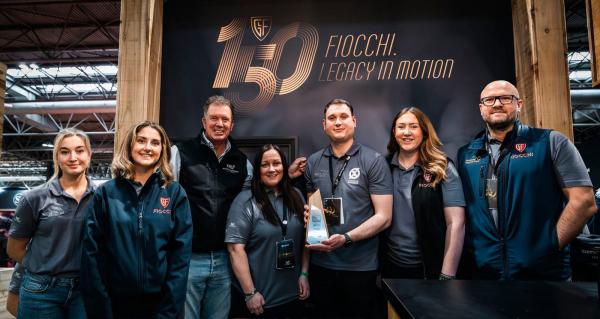
There are few clearer case studies in industrial longevity than Fiocchi. Founded by Giulio Fiocchi in Lecco, in the north of Italy, in 1876, the company is marking 150 years this year under a global campaign it calls Legacy in Motion - a year of events spanning the United States, Germany, Italy and the United Kingdom. For the international trade, the anniversary is an occasion to examine how a family ammunition house from Lombardy became one of the defining names in the global small-calibre business.
The headline structural fact is recent. Since 2022 Fiocchi has been part of the Czechoslovak Group, the international industrial and technology holding led by Michal Strnad, a move the company presents as the key to its modern scale. In an exclusive interview, Fiocchi’s UK leadership describes a group of more than 100 businesses whose combined expertise the ammunition arm can now draw on, with deliberate effort put into connecting teams across the group so that synergies are actually used rather than merely advertised. The platform, in this telling, has strengthened Fiocchi’s presence in the world’s major markets without displacing what the company insists remains a people-first culture.
That integration is more than an organisational chart. The UK team describes training opportunities, joint projects and regular gatherings across the group, and credits its leadership with setting a demanding but enabling tone - putting people in touch with the right expertise to get things done. For an industry watching consolidation reshape the small-calibre business, Fiocchi offers a worked example of how a heritage maker can absorb the backing of a much larger industrial group while keeping its own identity intact. The company itself frames the arrangement as opening doors to expertise it never had before, and points out that being part of a global platform is, in any case, increasingly a precondition for competing at scale.
A family that stayed
For all the corporate machinery, the founding family has not exited. Five generations on, Fiocchis remain in senior positions within the group, and the UK team is keen to make the point that access to the family - and to its living memory of the business - is part of what the brand still offers. The youngest of them, fifth-generation Leonardo Fiocchi, is said to have worked through every department of the manufacturing operation to understand the product in full. That continuity is being recorded in a history of the company, produced as a book for the anniversary, charting the firm’s bond with its home territory and its long dialogue with international markets.
Vertical integration as a global moat
If one commercial fact explains Fiocchi’s successes, the company would point to its control of its own components. Across the group it manufactures from raw material to finished round - powders, primers, cases, bullets and shells - rather than buying components in. “There aren’t that many people that make components, and we’re one of them,” the UK team notes, with the pointed observation that some competitors are obliged to buy those very components from Fiocchi.
For the global trade, this is more than a margin story. Owning the propellant and the primer means owning burn rates, pressures and ignition characteristics - the variables that matter most as the entire industry is forced to develop non-lead ammunition. A manufacturer that controls the chemistry has a structural head start in the reinvention now under way, and Fiocchi is betting that this advantage will tell over the coming decade.
Local manufacturing, global reach
Fiocchi’s other strategic signature is the deliberate placement of manufacturing close to its markets. The group operates plants across Italy, the United States and the United Kingdom, employing well over 1,000 people, and its brand portfolio reflects a series of targeted acquisitions: the Italian premium house Baschieri & Pellagri, bought in 2020, and the British cartridge maker Lyalvale Express, acquired in 2022, sit alongside Fiocchi’s own marque.
The reasoning behind that spread is articulated clearly by James Rose, chief executive of the UK arm. Markets reward proximity, he argues, because customers order for the weekend, not for six months’ time, and a maker has to be positioned to reach them quickly. Fiocchi’s establishment of a UK company in 2007, and its later acquisition of a British manufacturing platform, is his worked example: the group recognised the UK as a loyal, strong market and chose to build there rather than service it from abroad. The same instinct explains a manufacturing presence that reaches well beyond Europe. For the global trade, it is a template - manufacture near the customer, tailor the product to the market, and shorten the chain.
The worldwide shift away from lead
The defining challenge for the international ammunition business is the move away from lead, and Fiocchi frames it as a global event rather than a national one. As a company already operating in European markets that have introduced lead restrictions, it has products and research in place; in Britain, the timetable is now set and well understood across the trade; and the company’s reading is that the rest of Europe will follow sooner than many expect.
“We’re all going to be in the same boat,” the UK team says. “All the companies are going to have to develop new products.” The framing is striking for its optimism: a regulatory upheaval that none of the industry sought is recast as a wave of innovation - new materials, new powders, new packaging - that every manufacturer will ride at once. For a company that makes its own components and has been researching non-toxic loads for years, a level playing field arriving on a fixed timetable is an opportunity as much as a cost.
One industry, celebrated together
The character of the anniversary itself tells the international trade something about how Fiocchi sees its place in the world. The celebrations have pointedly not been about the company alone. Events through 2026 have brought together suppliers, customers and even competitors, on the stated principle that the shooting business is a single, closely connected industry. The company has held gatherings in several countries - among them the United States, Germany and Italy - with a dedicated event planned for its own factory workers and their families, an acknowledgement that 150 years of survival was built by the workforce as much as by the boardroom. The thread running through them, the UK team stresses, is that Fiocchi would not be where it is without the suppliers it buys from and the competitors it supplies components, and the anniversary has been an invitation to the whole sector rather than a private party.
That outward-looking instinct is consistent with how the company reads the market. Fiocchi is keen to position the move away from lead not as a regional headache but as a worldwide reset that will favour the makers best prepared for it - and on its own account, a manufacturer that owns its components, sells across multiple geographies and has been researching non-toxic loads for years intends to be among them.
That is the note Fiocchi wants to strike at 150: deep historical roots in a single Italian town, married to an international outlook and the backing of a major industrial group. The phrase the company has chosen for the year - legacy in motion - is meant to capture exactly that combination of heritage and forward movement. For the global trade watching how a 19th-century maker handles a 21st-century transition, Fiocchi’s anniversary is less a backward glance and more so a statement of intent.
- Log in or register to post comments













|
 |
Content | |
Resources |
Copyright © 2026 Time Well Spent Group Limited
Registration number: 10204110 | Registered Office Address: Epsilon House, Enterprise Road, Southampton Science Park, Southampton, SO16 7NS, UK. Trading address and office is at Macnab House, 14 Belford Road, Edinburgh, EH4 3BL

